
Ahhh....Another peaceful Sunday morning. Time to put on some nice, relaxing easy going music. Right?
Well I'm having none of it. It's time to crank it up full blast and wake up the neighbours with some truly awesome music. The stuff you just won't hear on the radio. Anywhere.
Outsider musicians are those folks who simply make music the only way they know how. With very little to no musical training whatsoever. The conventional requisites of stardom are simply unheard of among outsider musicians.
This is not American Idol. There is no competition. Or critiquing. Or even practicing and rehearsals. What you hear is what you get.
They simply don't care about commercial success. Or any musical conventionality even amateur musicians adhere strictly to. They make their music on their own whims and for the sheer sake of their own personal enjoyment. Even if the only one enjoying it is themselves, they wouldn't care.
It also differs from vanity acts. Vanity acts actively look for a commercial breakthrough and exposure to the masses. Most outsider acts would never be heard at all were it not for certain friends and associates encouraging them to take a leap of faith and record their material.
Sometimes a major label finds them, but that's usually a by-product of local press buzz or through chance contacts. The labels never seek outsider musicians and outsider musicians never seek the labels. If planets align, they align. But that's very rare if they do. The major labels want something that delivers a massive return on whatever investment they make. And that's something no outsider act has ever really done.
Outsider music isn't even a conscientious rebellion against mainstream rock and pop's status quo, which usually drives most hardcore independent lo-fi punk bands. They truly believe in what they are doing in spite of what anyone thinks. They simply let their dim lights shine.
But what may sound like tone-deaf psychiatric patients (some, but not all outsider musicians suffer from some sort of severe mental illness) to the rest of us is technically a sub-sub genre of Alternative rock. It's not even a "new" thing ("Wild Man" Fischer, whom Frank Zappa discovered in the late 1960s, is a pioneer. So is David Peel, whom John Lennon discovered and released a few albums of his on the Beatles' Apple label in the early '70s, The Shaggs and to some extent, even Charles Manson.)
Today, we're going head first into the most obscure of obscure music genres. But like most of my posts here, I don't disclose everything. I like to leave some of it out for you, the reader, to explore on your own. I just merely set up the launch pad for your own journey (it might be one-way.) So this is not a complete list. Not by far. But it's enough to give a basic insight into this strange genre. Google "Outsider music", if you're really curious.
Bingo Gazingo
Bingo Gazingo (Murray Wachs, 1924-2010) was an elderly New York City outsider musician and poet with perhaps more punk rock authenticity than any band that ever played at CBGB's. And I mean all of them. He was, perhaps literally, the grandfather of punk.
With song titles like "Oh Madonna, You Stole My Pants", "Up Your Jurassic Park" and "I Love You So Fucking Much, I Can't Shit", you pretty much get the idea this was no ordinary retired postal worker from Queens.
He released an album through WFMU Radio in 1996 and this song, "You're Out of The Computer" was a collaboration with techno artist My Robot Friend (Howard Rigberg) from My Robot Friend's 2004 CD Hot Action! It also appears on the Songs in The Key of Z compilation of outsider music.
Tragically, Bingo Gazingo was struck down by a cab on his way to a performance at the Bowery Poetry Club where he appeared weekly every Monday night in November of 2009. He died of his injuries on New Year's Day, 2010. He was 85.
Wesley Willis

Wesley Willis (1963-2003) could be the most famous of outsider musicians, even garnering some airplay on mainstream alternative rock radio in the 1990s.
His story began as one of ten children born in a dysfunctional family (having so many siblings can throw even the most stable family off - think the Duggars) in the housing projects of Chicago. He spent most of his life going from foster home to foster home with two older brothers as their parents had a violent relationship and split up when Wesley was a child.
In spite of this horrific background, Wesley seemed to be a bright and fairly normal young man. However on October 21, 1989 (there are people who remember this specific date), he began to hear voices in his head, which he called "demons" and was diagnosed with paranoid schizophrenia.
About this time, he also began making music. Mostly as an outlet to escape the turmoil inside his head. He also made artwork and was discovered by members of Chicago's alternative rock scene, who encouraged his musical pursuits. This led to a collaboration called The Wesley Willis Fiasco and he actually became a sensation in the Chicago alternative underground, gaining attention from major label American Recordings, which was distributed by Warner Bros.
His favourite greeting wasn't a handshake or a hug. It was a headbutt to the forehead. I am not making that up. This left a permanent bruise on his forehead.
His music was crude, rambling and often profane. One unique characteristic of Wesley Willis is no matter what song he's performing, they all sound identical to each other. They mostly are songs about things that he had personally identified with in his life. Such as his local McDonald's, bands and stars such as Pink Floyd, Foo Fighters, Kurt Cobain and whatever else figured.
Here's a sample of what that sounded like
He eventually recorded 50 albums from 1994 until his untimely death in 2003 from leukemia. He was 40.
Daniel Johnston

Daniel Johnston, like Wesley Willis, also suffers from schizophrenia and like Willis, also uses music as a way to cope with it. Johnston is also a visual artist as well. However Johnston is different in the sense that his music is more introspective and melodic than either Wesley Willis or Bingo Gazingo. He's been called a "fractured genius" and "the indie Brian Wilson". He quite possibly could have achieved mainstream stardom and in fact, he came quite close to it.
Daniel Johnston began recording music as a teenager on a boombox at home in the late '70s. By the early '80s, he was self releasing his own material. He moved to Austin and appeared on MTV in 1985, which gained him further exposure. He went on to make more recordings, including collaborations with Sonic Youth, Half Japanese and other indie acts, who became fans of his.
But his schizophrenia was also worsening. In 1990, on the way to West Virginia on a small, private two-seater plane piloted by his father Bill, Johnston had a manic psychotic episode believing he was Casper the Friendly Ghost and removed the key from the plane's ignition and threw it out of the plane. His father, a former Air Force pilot, managed to successfully crash-land the plane, even though "there was nothing down there but trees". Although the plane was destroyed, Johnston and his father emerged with only minor injuries. As a result of this episode, Johnston was involuntarily committed to a mental hospital.
In the early '90s, Kurt Cobain was often seen wearing a t-shirt with the cover image of Johnston's 1983 album Hi, How Are You? on it.

Which lead to even more interest in Daniel Johnston. Even while involuntarily committed at the mental hospital, Warner Music label Elektra Records was interested in signing him, but he refused the deal as Elektra then was also the label home of Metallica, whom Johnston thought worshipped Satan.
Eventually he signed with Warner co-owned Atlantic Records, which released his only major label LP Fun in 1995. The album flopped commercially and Atlantic ended his contract in 1996.
In 2005, a full length documentary DVD on Daniel Johnston's life The Devil and Daniel Johnston was released.

Johnston is still active in music.
Jandek

To say Jandek is merely an outsider musician just doesn't quite cut it. In fact, he's been described as "The Rock N' Roll J.D. Salinger". Because he's perhaps the most reclusive of all the outsider musicians.
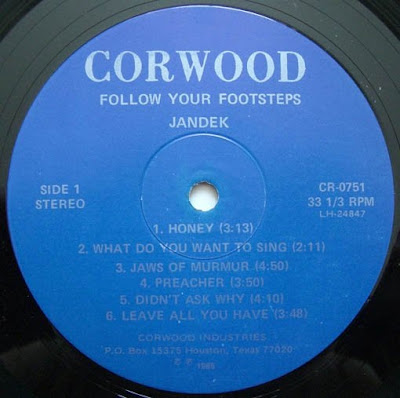
Yet he has released over 70 albums on the mail order Corwood Industries label. A label that while Jandek maintains a certain distance from professionally, has only issued Jandek material. And he has a surprisingly loyal and solid worldwide fan base. With almost no radio airplay or any promotion of any kind.
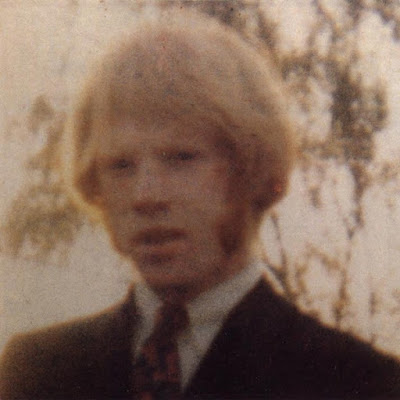
Most Jandek albums feature a young man on the covers in random photo shots and when you lay them out, you realize they are the same person - Jandek himself? Possibly.




But nothing has been directly confirmed by Jandek - he's only done a few interviews. But in rare recent pictures of Jandek, you do see a very strong, even uncanny resemblance.

Jandek's actual name has never been confirmed directly either, but he's believed to be Sterling Smith and he was born in 1945. Other than that, very little else is known about him. And that's how he likes it.
His music is a sort of psychedelic country-blues. But even that description isn't quite accurate. Jandek is a genre all to himself.
Jandek is an enigma even by outsider music standards. And that's saying something. In 2003, he released Jandek on Corwood, a documentary DVD that doesn't answer even the most basic questions of his life his fans always wanted to know. But then again, that mystique is still a part of his attraction.
He's still active, releasing an album or two a year and occasionally touring.
More:
Curly Toes
Wing Over America
Florence Foster Jenkins
"Do Ya Think I'm Sexy" Tiny Tim (1982)
Well I'm having none of it. It's time to crank it up full blast and wake up the neighbours with some truly awesome music. The stuff you just won't hear on the radio. Anywhere.
Outsider musicians are those folks who simply make music the only way they know how. With very little to no musical training whatsoever. The conventional requisites of stardom are simply unheard of among outsider musicians.
This is not American Idol. There is no competition. Or critiquing. Or even practicing and rehearsals. What you hear is what you get.
They simply don't care about commercial success. Or any musical conventionality even amateur musicians adhere strictly to. They make their music on their own whims and for the sheer sake of their own personal enjoyment. Even if the only one enjoying it is themselves, they wouldn't care.
It also differs from vanity acts. Vanity acts actively look for a commercial breakthrough and exposure to the masses. Most outsider acts would never be heard at all were it not for certain friends and associates encouraging them to take a leap of faith and record their material.
Sometimes a major label finds them, but that's usually a by-product of local press buzz or through chance contacts. The labels never seek outsider musicians and outsider musicians never seek the labels. If planets align, they align. But that's very rare if they do. The major labels want something that delivers a massive return on whatever investment they make. And that's something no outsider act has ever really done.
Outsider music isn't even a conscientious rebellion against mainstream rock and pop's status quo, which usually drives most hardcore independent lo-fi punk bands. They truly believe in what they are doing in spite of what anyone thinks. They simply let their dim lights shine.
But what may sound like tone-deaf psychiatric patients (some, but not all outsider musicians suffer from some sort of severe mental illness) to the rest of us is technically a sub-sub genre of Alternative rock. It's not even a "new" thing ("Wild Man" Fischer, whom Frank Zappa discovered in the late 1960s, is a pioneer. So is David Peel, whom John Lennon discovered and released a few albums of his on the Beatles' Apple label in the early '70s, The Shaggs and to some extent, even Charles Manson.)
Today, we're going head first into the most obscure of obscure music genres. But like most of my posts here, I don't disclose everything. I like to leave some of it out for you, the reader, to explore on your own. I just merely set up the launch pad for your own journey (it might be one-way.) So this is not a complete list. Not by far. But it's enough to give a basic insight into this strange genre. Google "Outsider music", if you're really curious.
Bingo Gazingo
 |
| Sweet dreams, ladies..... |
With song titles like "Oh Madonna, You Stole My Pants", "Up Your Jurassic Park" and "I Love You So Fucking Much, I Can't Shit", you pretty much get the idea this was no ordinary retired postal worker from Queens.
He released an album through WFMU Radio in 1996 and this song, "You're Out of The Computer" was a collaboration with techno artist My Robot Friend (Howard Rigberg) from My Robot Friend's 2004 CD Hot Action! It also appears on the Songs in The Key of Z compilation of outsider music.
Tragically, Bingo Gazingo was struck down by a cab on his way to a performance at the Bowery Poetry Club where he appeared weekly every Monday night in November of 2009. He died of his injuries on New Year's Day, 2010. He was 85.
Wesley Willis

Wesley Willis (1963-2003) could be the most famous of outsider musicians, even garnering some airplay on mainstream alternative rock radio in the 1990s.
His story began as one of ten children born in a dysfunctional family (having so many siblings can throw even the most stable family off - think the Duggars) in the housing projects of Chicago. He spent most of his life going from foster home to foster home with two older brothers as their parents had a violent relationship and split up when Wesley was a child.
In spite of this horrific background, Wesley seemed to be a bright and fairly normal young man. However on October 21, 1989 (there are people who remember this specific date), he began to hear voices in his head, which he called "demons" and was diagnosed with paranoid schizophrenia.
About this time, he also began making music. Mostly as an outlet to escape the turmoil inside his head. He also made artwork and was discovered by members of Chicago's alternative rock scene, who encouraged his musical pursuits. This led to a collaboration called The Wesley Willis Fiasco and he actually became a sensation in the Chicago alternative underground, gaining attention from major label American Recordings, which was distributed by Warner Bros.
His favourite greeting wasn't a handshake or a hug. It was a headbutt to the forehead. I am not making that up. This left a permanent bruise on his forehead.
His music was crude, rambling and often profane. One unique characteristic of Wesley Willis is no matter what song he's performing, they all sound identical to each other. They mostly are songs about things that he had personally identified with in his life. Such as his local McDonald's, bands and stars such as Pink Floyd, Foo Fighters, Kurt Cobain and whatever else figured.
Here's a sample of what that sounded like
He eventually recorded 50 albums from 1994 until his untimely death in 2003 from leukemia. He was 40.
Daniel Johnston

Daniel Johnston, like Wesley Willis, also suffers from schizophrenia and like Willis, also uses music as a way to cope with it. Johnston is also a visual artist as well. However Johnston is different in the sense that his music is more introspective and melodic than either Wesley Willis or Bingo Gazingo. He's been called a "fractured genius" and "the indie Brian Wilson". He quite possibly could have achieved mainstream stardom and in fact, he came quite close to it.
Daniel Johnston began recording music as a teenager on a boombox at home in the late '70s. By the early '80s, he was self releasing his own material. He moved to Austin and appeared on MTV in 1985, which gained him further exposure. He went on to make more recordings, including collaborations with Sonic Youth, Half Japanese and other indie acts, who became fans of his.
But his schizophrenia was also worsening. In 1990, on the way to West Virginia on a small, private two-seater plane piloted by his father Bill, Johnston had a manic psychotic episode believing he was Casper the Friendly Ghost and removed the key from the plane's ignition and threw it out of the plane. His father, a former Air Force pilot, managed to successfully crash-land the plane, even though "there was nothing down there but trees". Although the plane was destroyed, Johnston and his father emerged with only minor injuries. As a result of this episode, Johnston was involuntarily committed to a mental hospital.
In the early '90s, Kurt Cobain was often seen wearing a t-shirt with the cover image of Johnston's 1983 album Hi, How Are You? on it.

Which lead to even more interest in Daniel Johnston. Even while involuntarily committed at the mental hospital, Warner Music label Elektra Records was interested in signing him, but he refused the deal as Elektra then was also the label home of Metallica, whom Johnston thought worshipped Satan.
Eventually he signed with Warner co-owned Atlantic Records, which released his only major label LP Fun in 1995. The album flopped commercially and Atlantic ended his contract in 1996.
In 2005, a full length documentary DVD on Daniel Johnston's life The Devil and Daniel Johnston was released.

Johnston is still active in music.
Jandek

To say Jandek is merely an outsider musician just doesn't quite cut it. In fact, he's been described as "The Rock N' Roll J.D. Salinger". Because he's perhaps the most reclusive of all the outsider musicians.
Yet he has released over 70 albums on the mail order Corwood Industries label. A label that while Jandek maintains a certain distance from professionally, has only issued Jandek material. And he has a surprisingly loyal and solid worldwide fan base. With almost no radio airplay or any promotion of any kind.

Most Jandek albums feature a young man on the covers in random photo shots and when you lay them out, you realize they are the same person - Jandek himself? Possibly.


But nothing has been directly confirmed by Jandek - he's only done a few interviews. But in rare recent pictures of Jandek, you do see a very strong, even uncanny resemblance.

Jandek's actual name has never been confirmed directly either, but he's believed to be Sterling Smith and he was born in 1945. Other than that, very little else is known about him. And that's how he likes it.
His music is a sort of psychedelic country-blues. But even that description isn't quite accurate. Jandek is a genre all to himself.
Jandek is an enigma even by outsider music standards. And that's saying something. In 2003, he released Jandek on Corwood, a documentary DVD that doesn't answer even the most basic questions of his life his fans always wanted to know. But then again, that mystique is still a part of his attraction.
He's still active, releasing an album or two a year and occasionally touring.
More:
Curly Toes
Wing Over America
Florence Foster Jenkins
"Do Ya Think I'm Sexy" Tiny Tim (1982)


